Key Takeaways
- Real-time analytics has grown from a manufacturing tool into a force across consumer devices, retail, finance, and supply chains.
- Seven trends are driving what’s next, from IoT growth to rising data literacy.
- Adoption hurdles are as much organizational as technical — overload, accuracy, integration, latency, and cost.
- Machine learning and event stream processing now turn real-time data into automated action, not just dashboards
This is the 7th and last post in our series, Real-time Data Visualization. Real-time analytics got its start in manufacturing plants, where sensors tracked temperature, weight, monitoring reporting dashboard in real-time, and volume to monitor system health, while RFID and surveillance cameras extended it into security and workforce management. From there, it was only a matter of time before this kind of real-world data tracking spread far beyond the factory floor.
In this post, we trace that evolution and identify 7 overarching trends shaping how we’ll use real-time data in the years ahead.
Table of Contents
What Are the 7 Data Analytics Trends Shaping Real-Time Analytics?
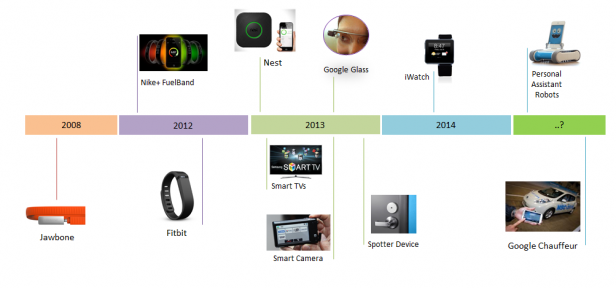
Today, we see a wave of connected devices flooding the consumer market and throwing open new doors of opportunity for consumers and businesses alike. Makes us wonder what the future of real-time analytics holds for us. Here are 7 data analytics trends that could turn out to be defining factors as the future of real-time analytics unfolds:
1. The Internet of Things will grow in leaps and bounds
The explosion of internet data over the past two decades was largely driven by cameras and mobile phones, and Gartner estimates connected devices will grow 30-fold in the years ahead. As more of daily life gets connected, the volume of real-time data keeps climbing, alongside real questions about privacy, security, and how to manage that much information responsibly.
- Wearables that track physical activity in real time
- Smart home devices, from TVs to connected home appliances
- Consumer tech pushing further, from AR-style glasses to self-driving cars
2. Consumer technology has a boomerang effect on businesses
Real-time technology started in manufacturing, then trickled into consumer devices like mobile phones. Now that trend has reversed: consumer habits are reshaping business tools. Bring-your-own-device policies, enterprise apps borrowing consumer design principles, and even traditional B2B platforms like Salesforce leaning into social features all reflect this shift.
3. Automation will become mainstream

Automation tools like IFTTT already make it simple to trigger actions, like an alert when an appliance’s temperature changes — across everyday apps like Gmail, Evernote, Twitter, and Facebook. As big data technology matures, businesses will apply the same logic at scale, letting systems act on data automatically instead of waiting on manual review.
- Automated alerts triggered by real-time sensor or system data
- Personalized marketing campaigns based on live customer behavior
- Automated, data-driven customer support responses
4. Big data technologies make real-time analytics more accessible
Hadoop was originally built for batch processing and struggled with real-time demands, but additions like YARN and community-backed tools like Storm have extended it to handle real-time workloads too. As more companies adopt these tools, the same advancements are surfacing familiar challenges: managing data volume, maintaining accuracy, and scaling systems reliably.
5. Agile approach in reporting

Businesses will realize that the big data revolution is not really about technology but about the change in culture and mindset. This will push them to rethink how they access, process, and use data. Rather than build one all-encompassing tool that handles all data, the norm will be to let the tools serve the purpose. We’re already seeing signs of that with real-time aggregation dashboards like Geckoboard. Executives will awaken to the possibility of accessing data using flexible methods in a way that wasn’t possible before.
6. Move from real-time to right-time analytics
The advancement of technology will push the limits on what’s possible, but on the downside, it obscures what’s really necessary. The paradox of choice. Businesses will be averse to data overload and demand more from real-time applications. The focus will shift from not just reporting data in real-time to reporting it at the right time and the right way, making it actionable and useful. As part of emerging trends in data analytics, this shift will emphasize smarter, more targeted insights, enabling businesses to act decisively and maximize the value of their data.
7. Data literacy increases
Google’s Hal Varian believes data science is set to be the sexy job of the next ten years, and as that mindset spreads, users are growing more comfortable with — and more demanding of – an application’s data capabilities. Plain numbers and tables are giving way to expectations for richer, more interactive visualizations.
I’ll leave it to you to decide which of these trends will last and which will fade. But whatever direction the future takes, real-time data will remain essential to how we work and live. If you’d like to go deeper, check out our white paper, ‘The Ultimate Guide to Real-time Data Visualization,’ for real-world examples and guidance on choosing a real-time charting solution.
What Are the Key Differences Between Batch and Real-Time Data Processing?
These two approaches differ in more than just timing; they call for different infrastructure, cost, and use cases altogether:
| Factors | Batch Processing | Real-Time Processing |
| When data is processed | On a schedule – hourly, daily, or longer | Continuously, the moment it’s generated |
| Speed of insight | Delayed until the next batch cycle | Immediate, near-instant updates |
| Infrastructure cost | Generally lower | Higher |
| Example technology | Traditional Hadoop | Hadoop extended with YARN and Storm |
| Best suited for | Historical reporting, large-scale periodic analysis | Time-sensitive decisions, live monitoring, anomaly detection |
What are common challenges in implementing real-time data pipelines, and how do companies address them?
Plenty of data analytics challenges are there which can include anything from creating an architecture and changing business processes to training employees. Let’s discuss a few of them here:
Data Overload:
Managing the vast volumes of data generated in real-time can be overwhelming, making it difficult to process and make actionable decisions.
How Companies Address It
Shifting from “real-time” to “right-time” reporting, surfacing only the insights that are actionable in the moment.
Data Accuracy:
It is crucial to ensure that the accuracy of the data in real-time is precise and reliable, but the speed of data generation can lead to inconsistencies or errors.
How Companies Address It
Building validation and cleansing steps directly into the data pipeline rather than after the fact.
Data Integration:
Combining data from various sources with different formats and protocols can be complex, especially when trying to analyze in real-time.
How Companies Address It
Standardizing on common data formats and using integration middleware to normalize sources before analysis.
Latency:
Minimizing delays in processing data is essential. Even slight lag can result in lost opportunities or incorrect decisions, especially in fast-paced industries.
How Companies Address It
Adopting stream processing architectures that analyze data as it arrives, rather than waiting on full-batch cycles.
Cost of Infrastructure:
Real time analytics requires substantial investment in technology, such as hardware, software, and skilled personnel, which can be a barrier for many organizations.
How Companies Address It
Starting with cloud-based or modular tools that scale with demand instead of committing to large upfront infrastructure.
What Features Should I Look for in Real-Time Data Analytics Software?
The right feature set depends on your use case, but a few capabilities consistently separate strong platforms from basic ones:
- Low-latency data ingestion and processing, so insights reflect what’s happening right now
- Customizable, real-time dashboards and visualizations that fit how your team actually works
- Built-in anomaly detection and automated alerting
- Scalability to handle growing data volume without a full infrastructure overhaul
- Clean integration with your existing data pipelines and sources
How Do I Choose the Best Real-Time Data Analytics Tool for My Business?
Match the tool to your actual data volume and latency needs; not every business needs millisecond-level processing, and overbuying complexity can slow adoption down. Beyond that, check how well a tool integrates with your existing data sources, whether you need to build custom pipelines or can rely on an out-of-the-box dashboard solution, and how accessible the tool is for your team’s current data literacy level, since the fastest-adopted tools are usually the ones people can actually use without heavy training.
What Industries Are Leading Adopters of Real-Time Data Analytics Technology?
Real-time analytics has moved well beyond its manufacturing roots into a range of industries:
- Retail: Real-time inventory visibility and personalized promotions based on live customer behavior
- Financial services: Monitoring transactions and market data as it happens to support faster, more informed decisions
- Supply chain and logistics: Tracking shipments and demand signals in real time to reduce delays and improve forecasting
- Manufacturing: The original use case, still central today, using sensors and RFID to monitor equipment performance and output
Conclusion
In conclusion, real time analytics transforms how we work and live by driving innovation, improving efficiency, and reshaping industries. From the rise of IoT devices and automation to adopting big data technologies and agile reporting methods, these data analytics trends highlight a future where data is more accessible, actionable, and impactful.
As businesses shift from real-time to right-time analytics, they will focus on delivering insights at the most critical moments. With increasing data literacy and the growing demand for intuitive visualizations, real time analytics is poised to remain a cornerstone of technological advancement and societal progress for years to come.
Take the Next Step with Real-Time Data Analytics
Ready to put real-time analytics to work? Whether you’re building dashboards, adding real-time charts, or exploring new visualization options, FusionCharts offers the tools to turn your data into decisions. Check out FusionCharts’ Real-Time Charts
Frequently Asked Questions
1. What are the capabilities of real time data analytics?
Real-time data analytics enables instant processing and insights from data as it is generated, improving decision-making speed. It supports monitoring trends, detecting anomalies, and automating responses. This capability is vital in industries like finance, healthcare, and e-commerce.
2. What are some of the challenges of real time data processing?
The data analytics challenges include handling high data volumes and velocity while maintaining low latency. Ensuring data quality and system scalability adds complexity. Additionally, real-time systems require robust infrastructure and significant resource investment.
3. What is the process of analyzing data in real-time as it is generated?
Real-time analytics involves collecting data from various sources, processing it using stream processing tools, and delivering insights instantly. This process relies on advanced technologies like Apache Kafka or Spark. Visualizations and alerts are generated to assist immediate action.
4. What is the main benefit of real-time analytics in big data?
The main benefit is the ability to make faster, data-driven decisions, leading to improved operational efficiency. It helps businesses adapt quickly to changing conditions and enhance customer experiences. Real-time insights are crucial for staying competitive in dynamic industries.
5. Are there cloud-based real-time data analytics solutions available?
Yes, most modern real-time data analytics solutions are cloud-based, which helps address the infrastructure cost challenge by letting organizations scale capacity as needed rather than investing in hardware upfront.
6. Can you compare top real-time data analytics products by performance?
Performance among real-time analytics products often comes down to latency (how fast data appears after it’s generated) and scalability (how well the platform handles growing data volume), both worth testing against your own data before choosing.
7. Which real-time data analytics providers specialize in financial services?
See the Industries section above; financial services adoption tends to center on real-time transaction and market monitoring, with providers chosen based on how well they integrate with existing financial data infrastructure.
8. What are the latest trends in real-time data analytics platforms?
Current trends include a shift toward “right-time” rather than purely real-time reporting, deeper integration of machine learning for automated anomaly detection, and growing accessibility as big data tools become easier for non-technical teams to use.